1. Project
Who I Collaborated With
Two amazing analysts, Stanley and Leonard.
My Role
I was selected to become Project Lead shortly after getting involved with the project.
Goal setting and engagement with partners and stakeholders
Analyzing and interpreting insights
Creating presentations & presenting to partners and stakeholders
Workshop leadership
Designing and presenting interventions
Applying behavioural economic principles throughout the project.
My Responsibilities
2. Objectives
Problem Space
In the weeks after harvest, Sub-Saharan Africa alone loses 20 million metric tons of food each year, valued at over $4 billion.
Post-harvest food loss is a leading cause of food insecurity for millions of families across the world. The World Food Program and Busara partnered to examine post-harvest loss (PHL) management knowledge and attitudes that affect the uptake of loss reduction technologies and equipment in Kenya.
Intended Outcomes
Design behaviourally informed interventions aimed at encouraging uptake and usage of low-cost PHL technologies for farmers in arid and semi-arid areas.
3. My Work
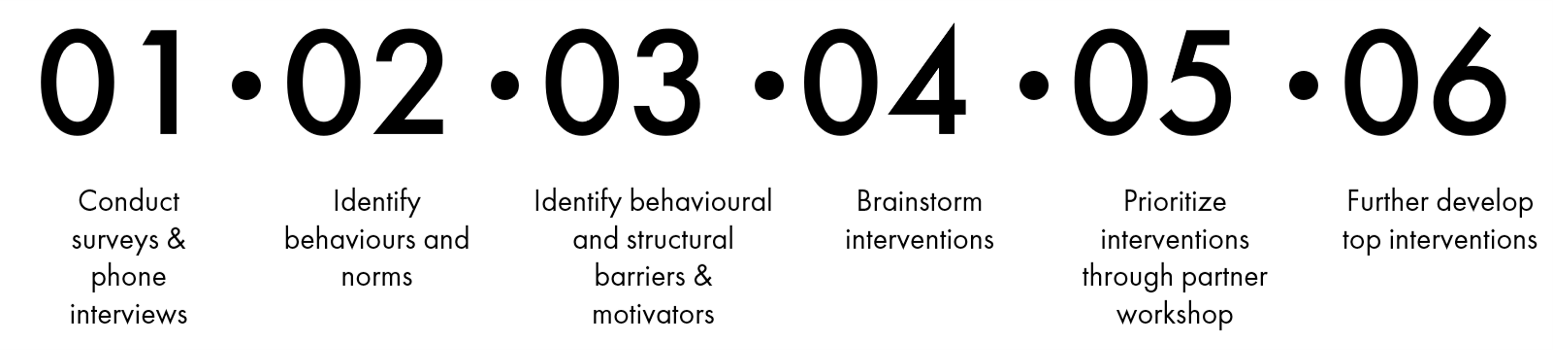
Process Outline
Constraints
Covid-19 posed a major barrier to participation
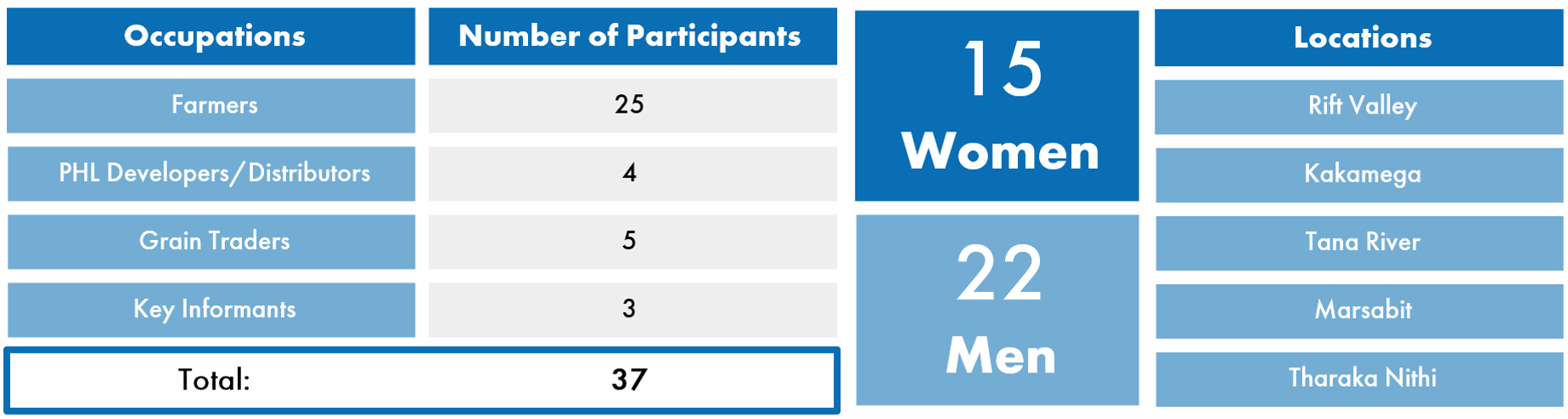
Covid-19 allowed no in-person interviews, workshops, or interactions. Not everyone had access to the internet, phone service, and/or their own personal electronic devices, especially in rural areas. Out of the 40 participants targeted, 37 were able to access phone services, some through local partners' buildings and devices.
We surveyed and telephone interviewed 37 participants from 5 different farming locations.
Data Collection was done through surveys and telephone interviews which were translated from Swahili to English and later checked for quality and matching.
Methodology
Insights - Behaviours & Norms
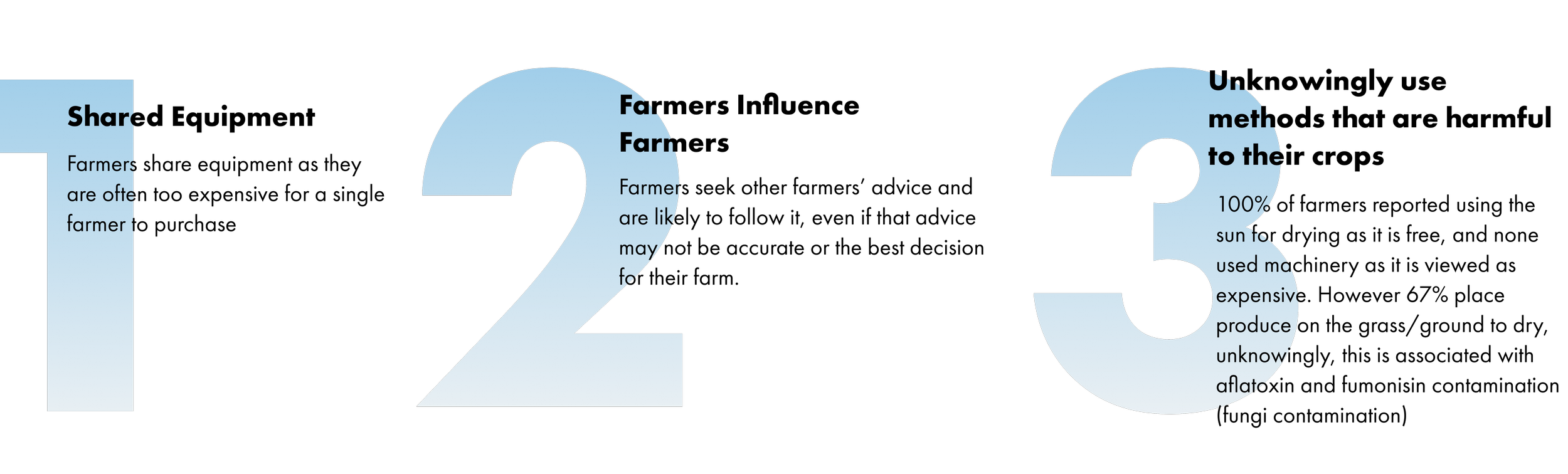
We sought to understand the current behaviours & norms affecting post-harvest loss management and the adoption of PHL tools. Through those insights, we identified barriers & motivators to guide the intervention designs.
Behaviour & Norms Insight Examples:
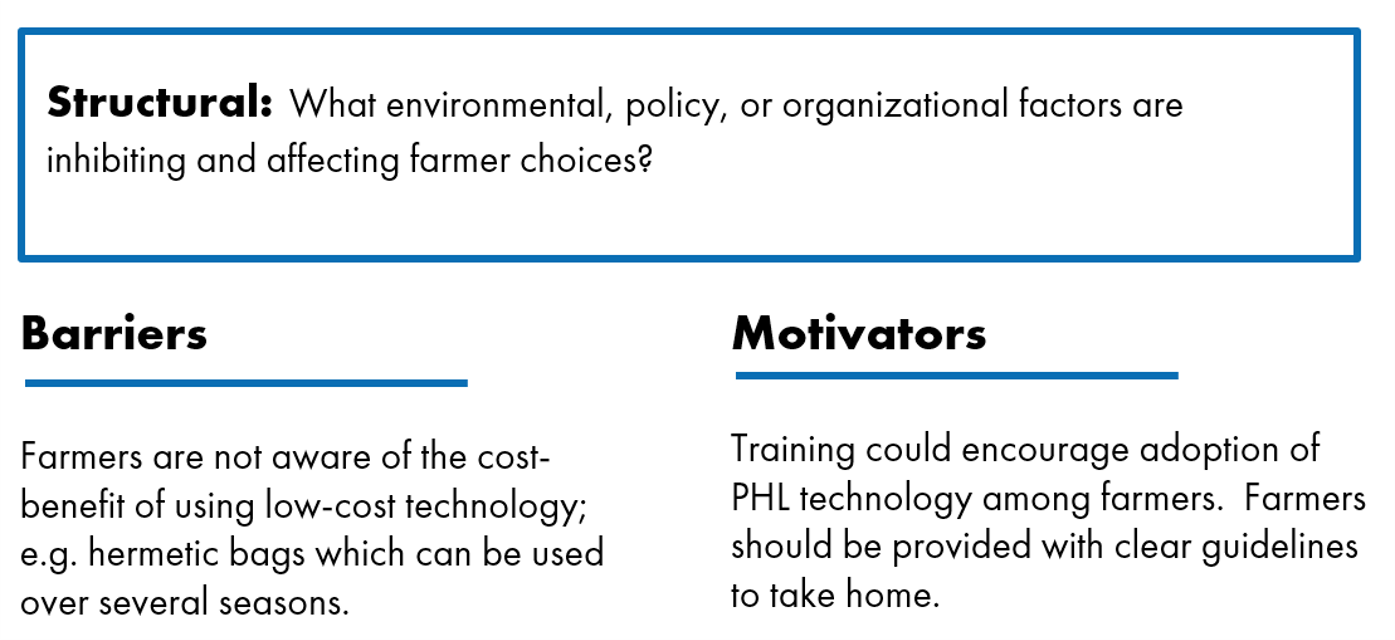
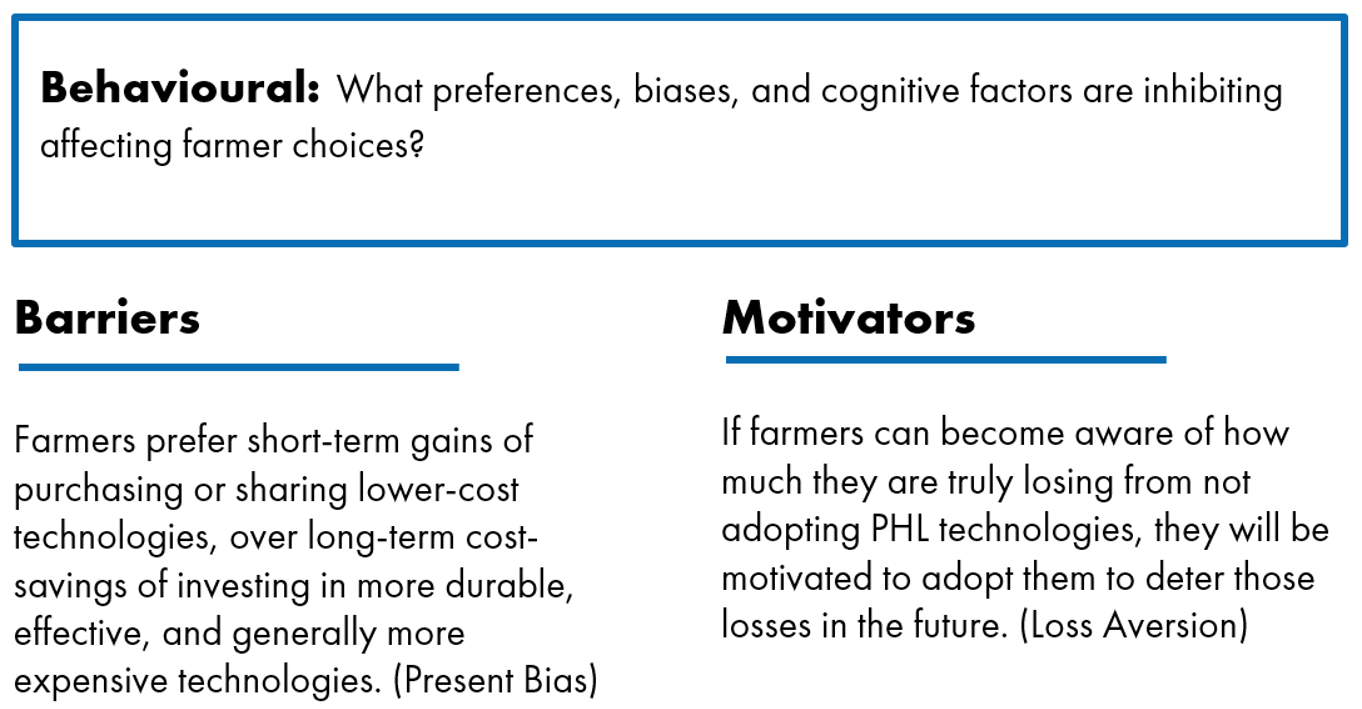
Insights - Barriers & Motivators
The barriers and motivators were separated into logistical and behavioural categories.
Barriers & Motivators Insight Examples:
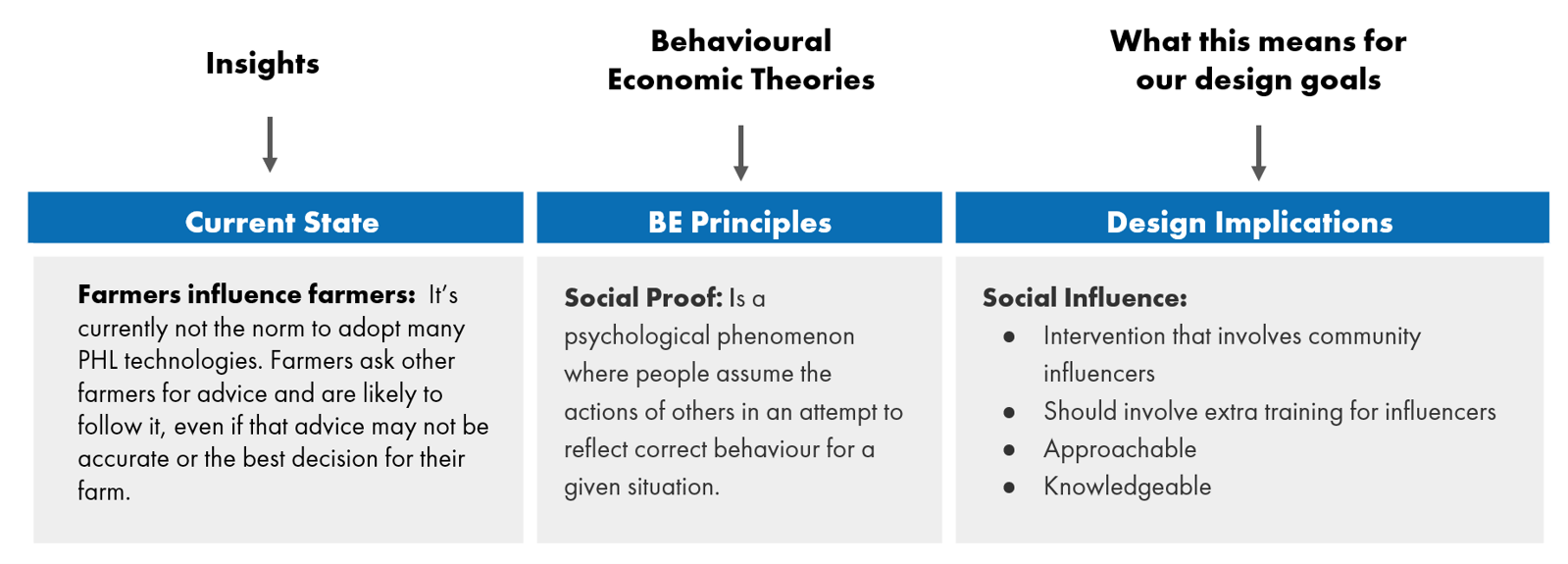
Design Implications
We combined the barriers, motivators, and behavioural economic principles in order to create our intervention design strategies.
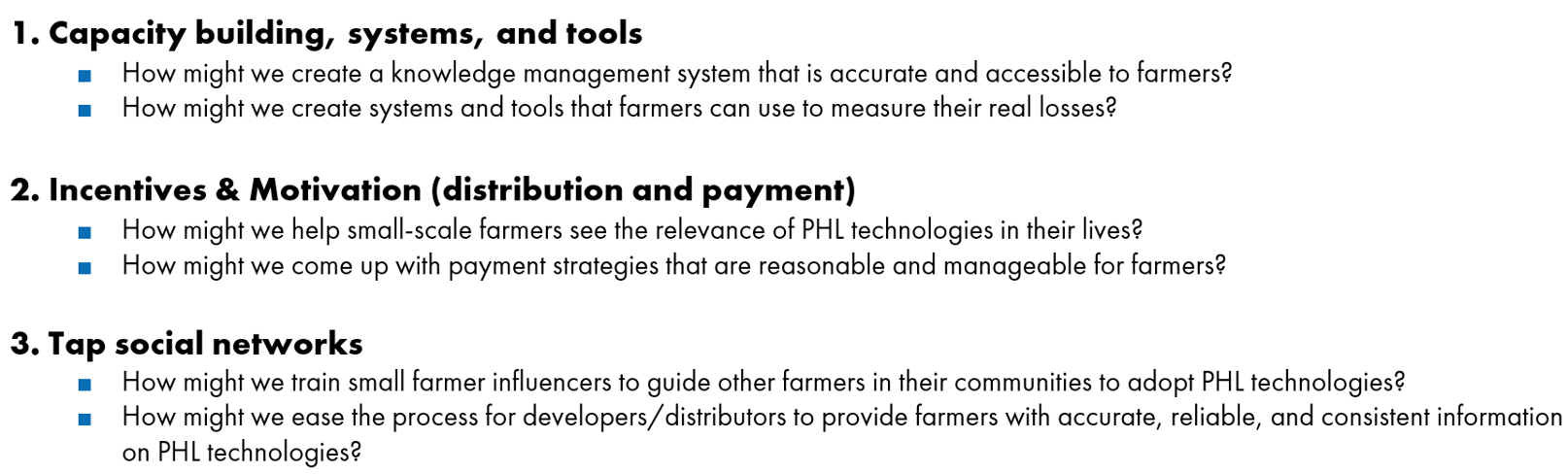
How Might We…?
We grouped all similar goals into three common themes and created “How Might We’s” for our designs.
4. Final Outcome
Interventions
We came up with over 35 ideas…
We were asked to come up with as many feasible ideas as we wanted, and so we did.
Partner & Stakeholder Presentation + Workshop
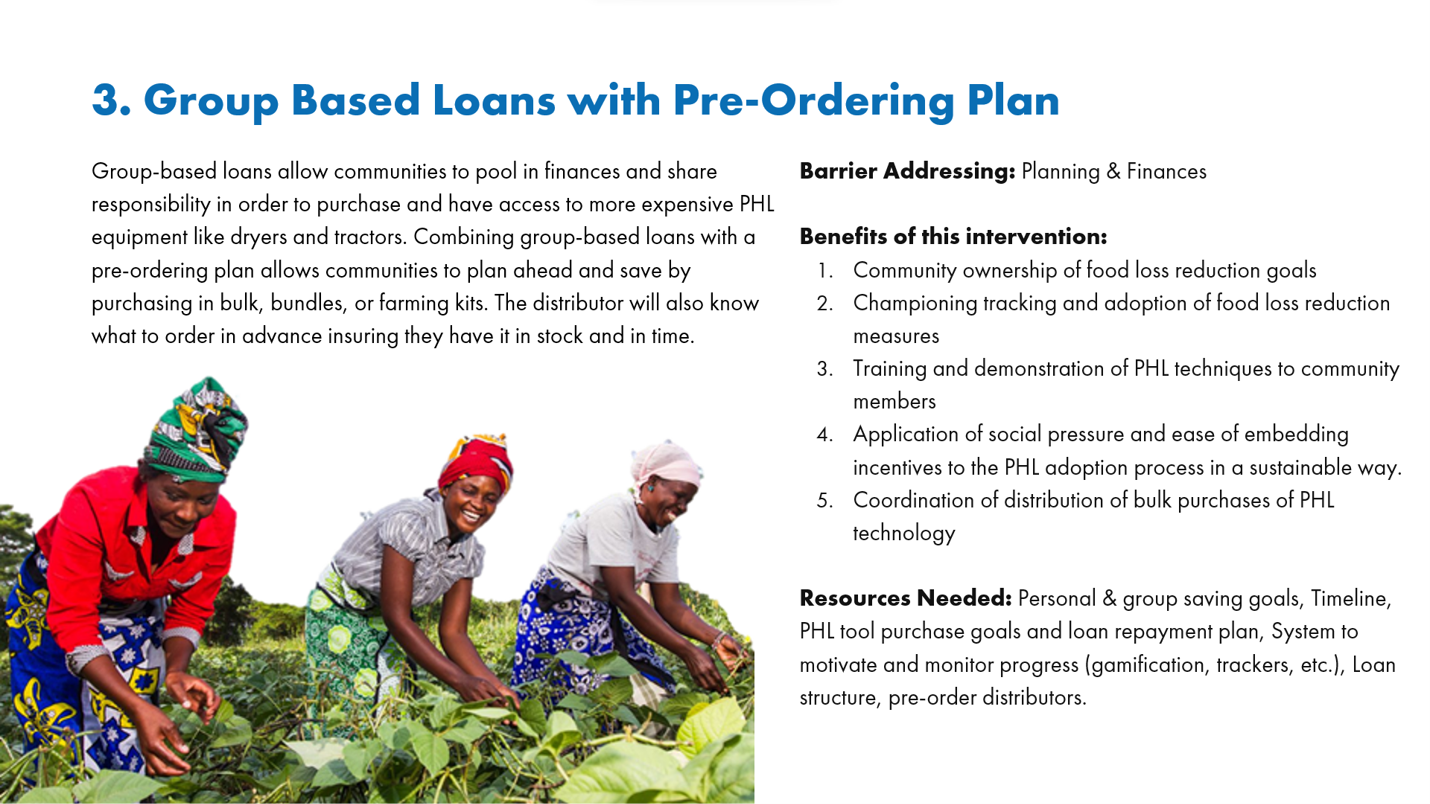
After presenting our interventions we held a workshop to prioritize top ideas to further develop.
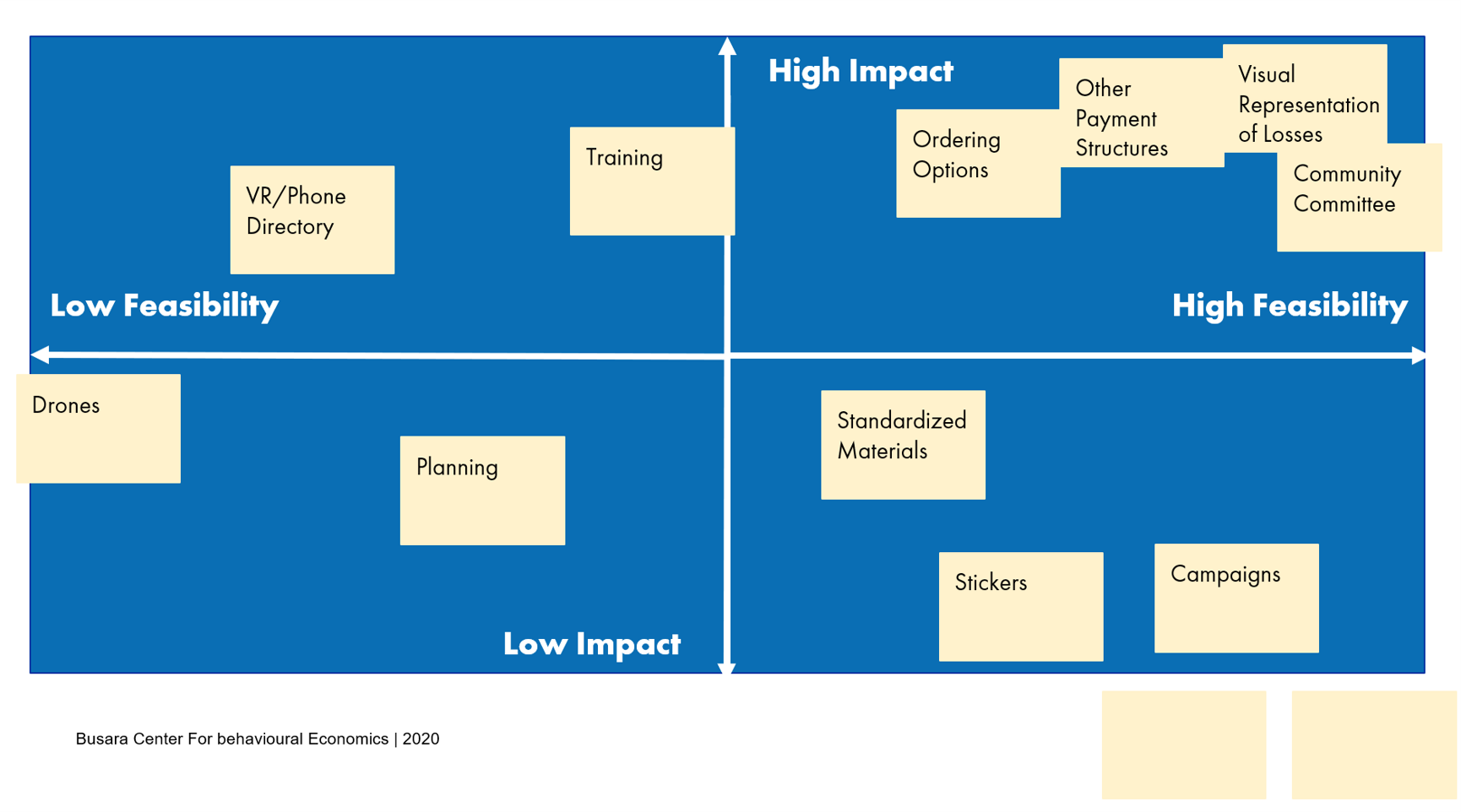
Top 3 Ideas
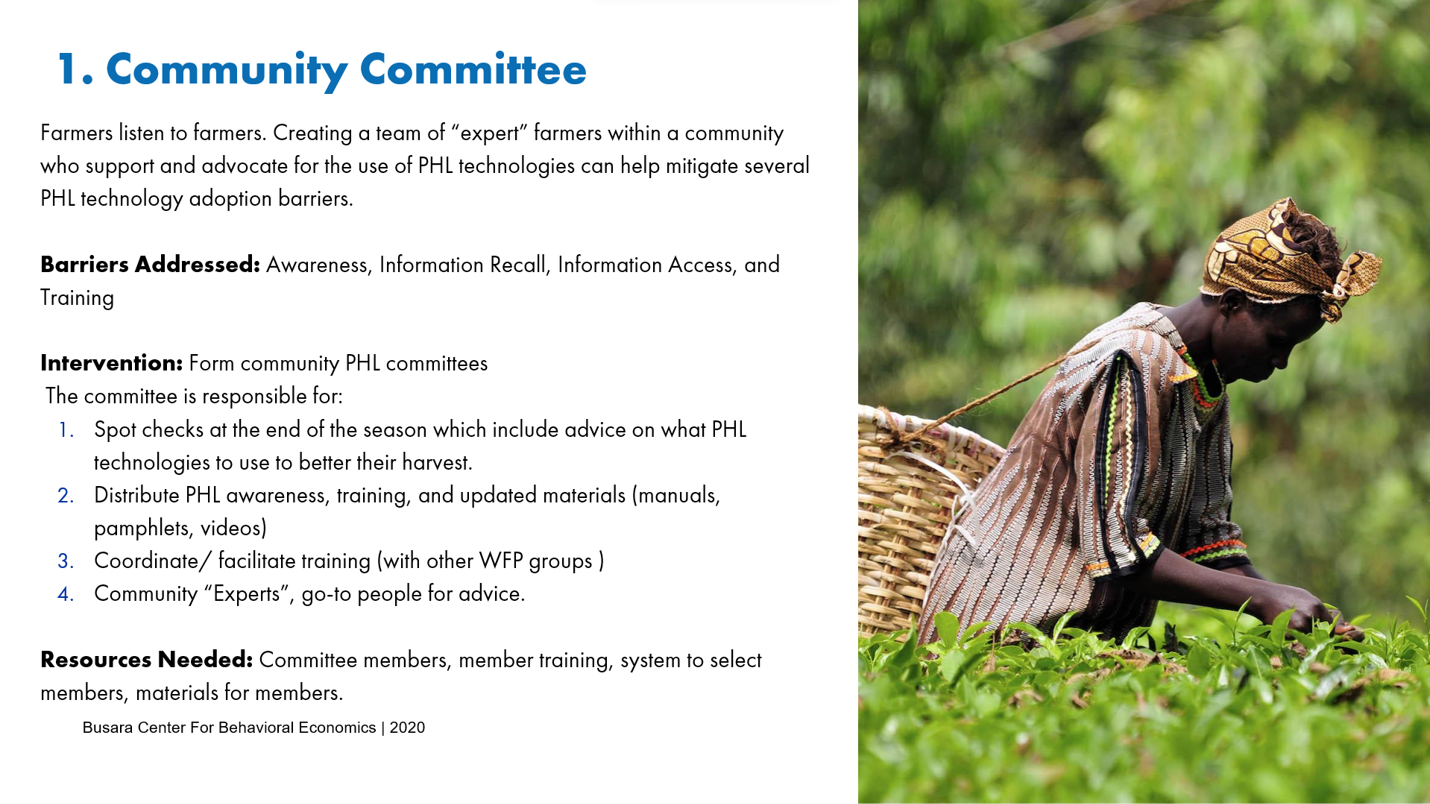
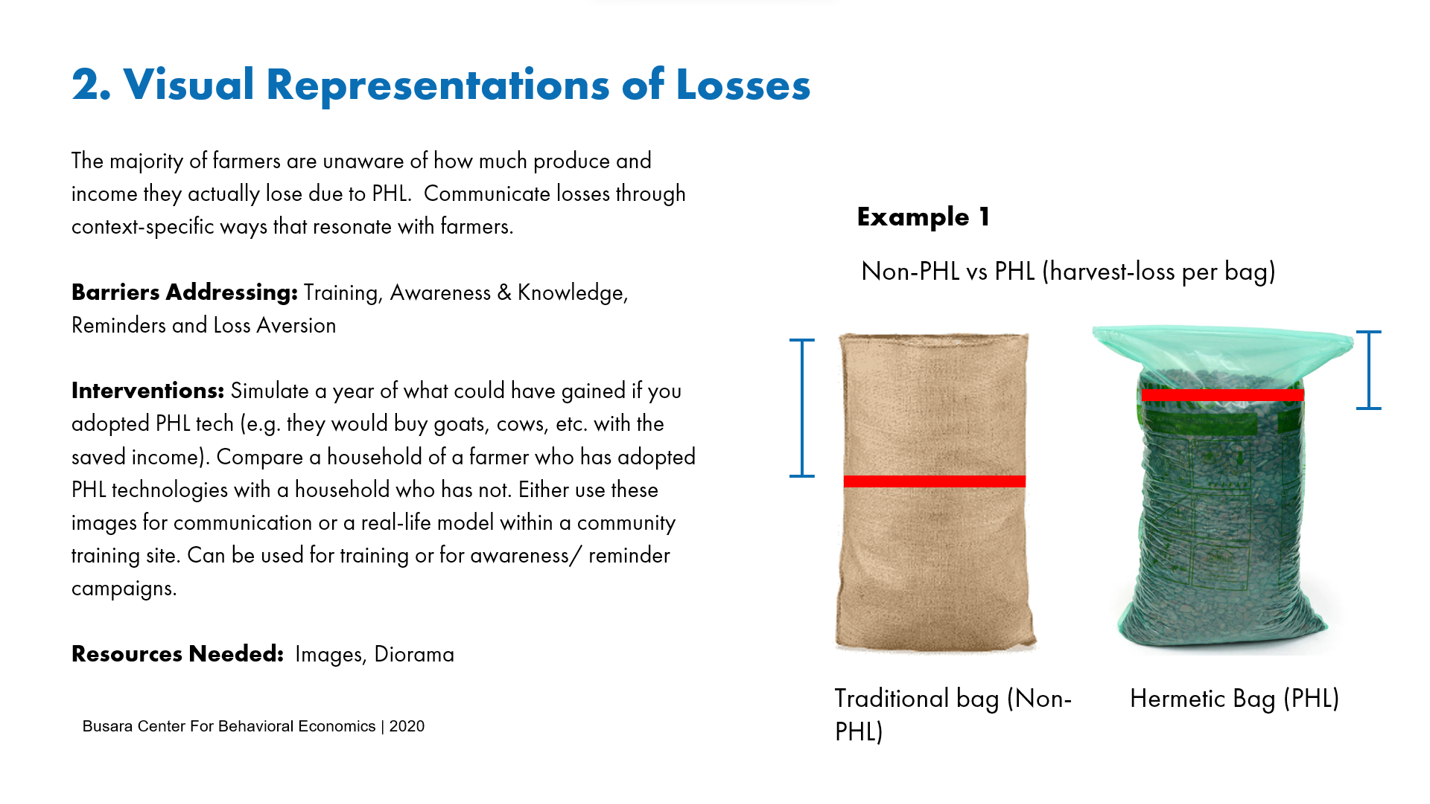
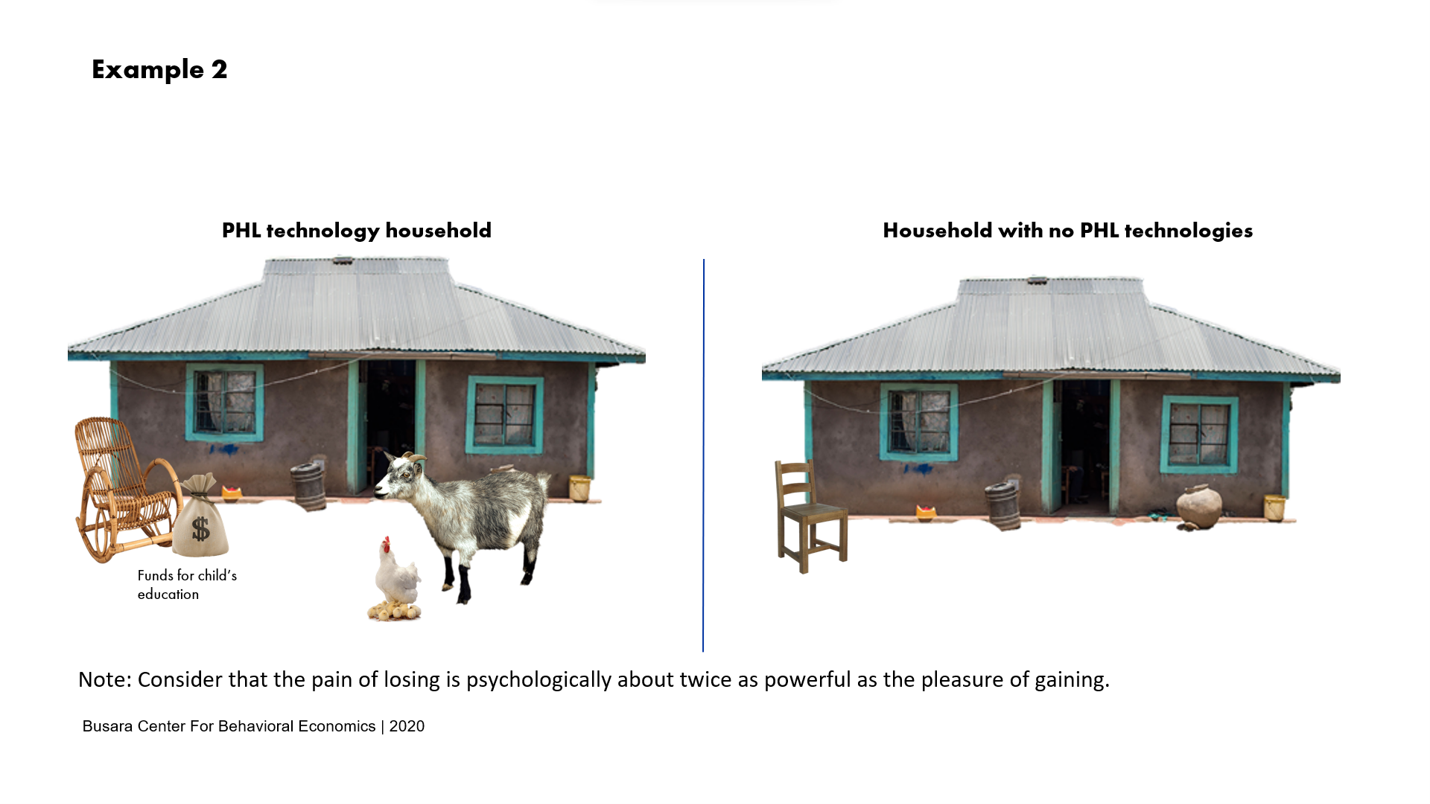
We selected 3 ideas to further develop in the future.
5. Reflections
What I would do differently + Lessons learned
1. Listen to those who know the culture
As project lead, I heavily relied on and valued the opinions and advice of the analysts on my team. They are both Kenyans whilst I am Canadian and have never had the opportunity to visit Kenya. They were able to provide deeper insights into cultural differences and processes which in turn helped create the research materials and intervention designs.
2. Autophotography for deeper understanding
Autophotography would have been an opportunity to build further understanding of contexts that we don’t understand. Having participants take images of their environments and processes would allow us to get a glimpse into what their facilities look like.
Example 1: Communities share storage facilities, what does that look like and how can we build ideas specifically for storage efficiency?
Example 2: Distributors and sellers often provide ads and info about PHL technologies. What do their stores look like, where are the ads, and how are they advertised?