Project Duration
October 2025 - November 2025
My Role
Human Intelligence, Research Manager
Questionnaire & Design
Field Management
Data Analysis & Insight Interpretation
Report Creation & Presentation
Manage Project Timeline & Budget
Manage Project Client
My Responsibilities
Problem
Canadian immigrants have difficulty securing careers that match their goals.
My parents had difficulty transferring their international education after immigrating to Canada. Unable to transfer their skills and education, they spent their remaining years in Canada working in construction and as janitors. Although there are more resources for immigrants now, first-generation immigrants still face barriers in finding and accessing them.
Solution
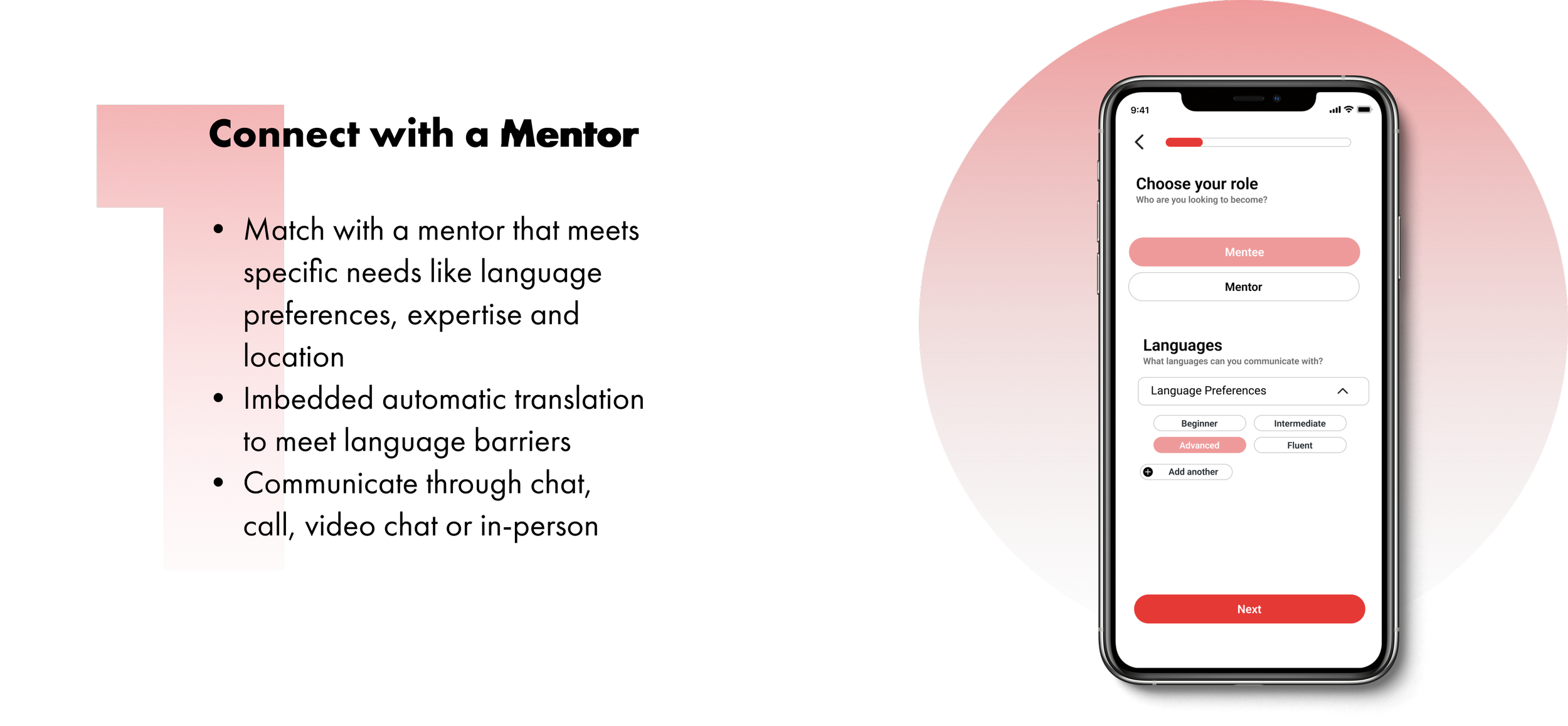
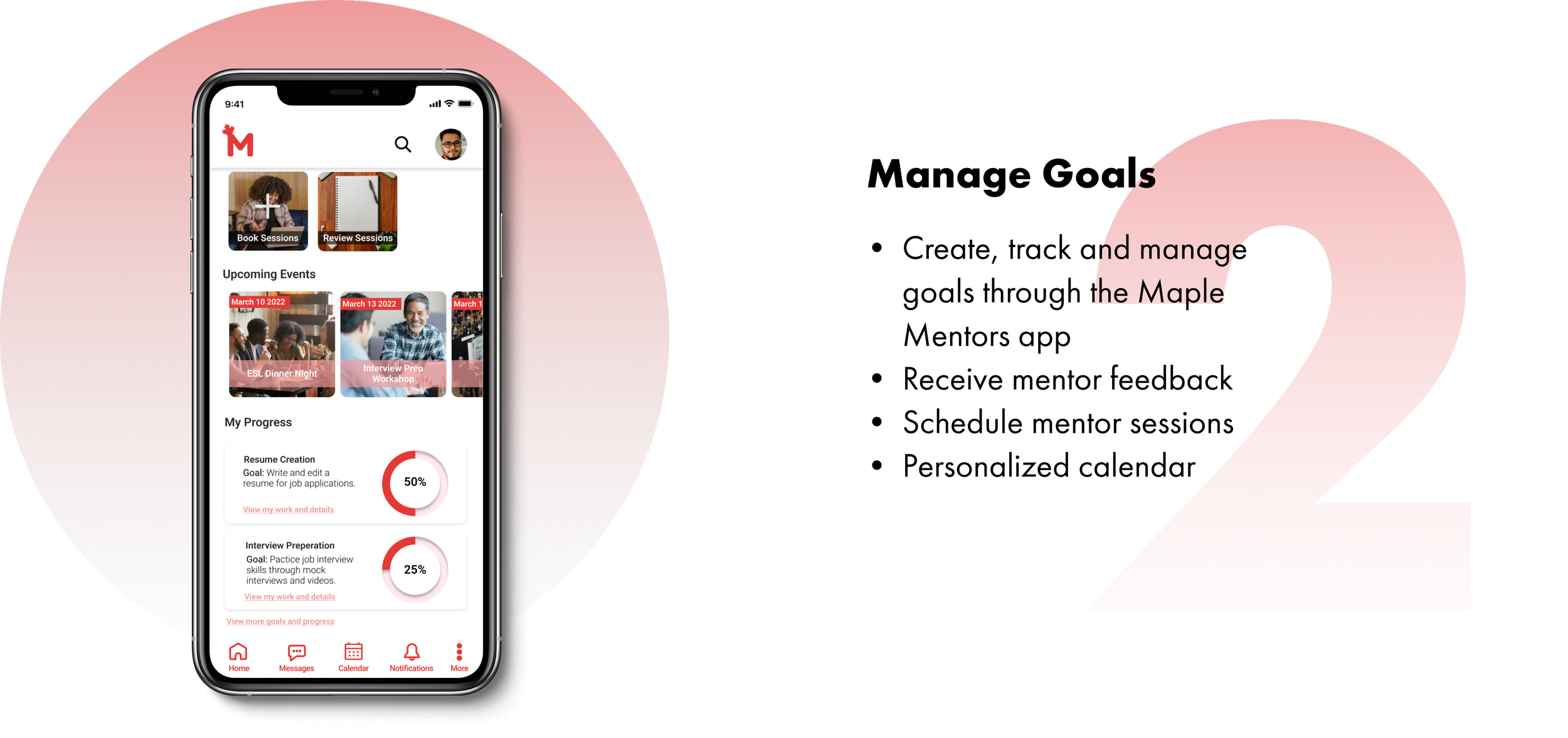
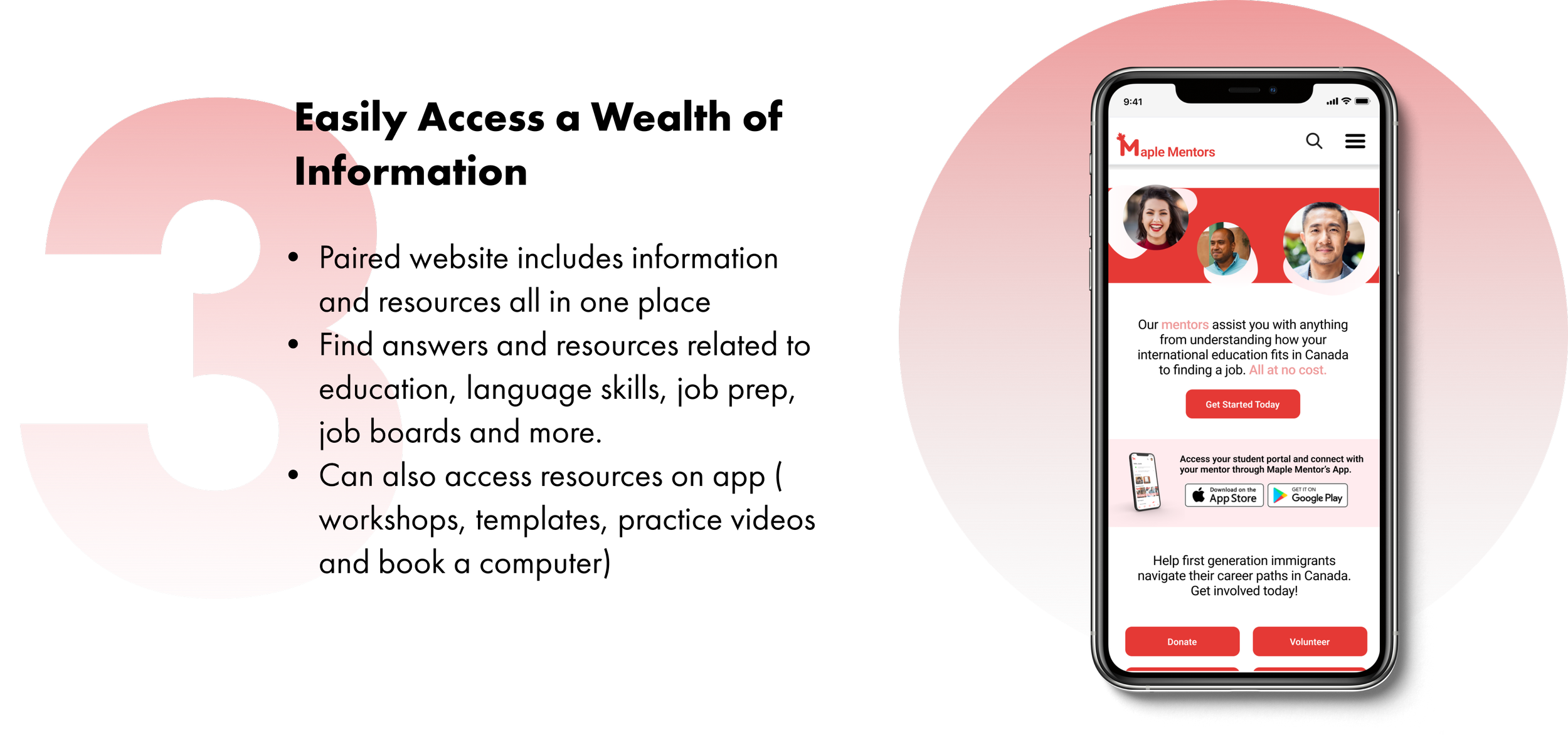
A mentorship platform focused on providing knowledge, advice and resources to first generation Canadian immigrants
Process Outline

1. Empathize
Interviews
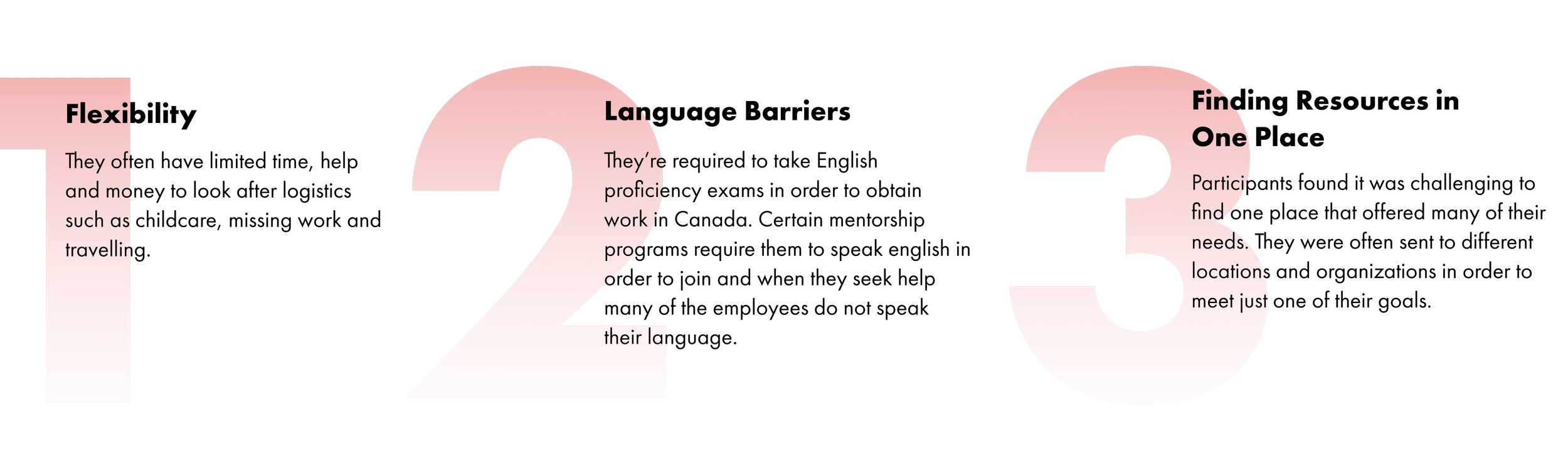
Interviewees had limited time, resources, and English skills.
I conducted 4 interviews with Canadian immigrants in order to understand what would have helped them better navigate their career paths upon arriving in Canada and what struggles they still currently face. I derived 3 main insights:
Competitive Analysis
Mentorship opportunities offered by competitors are program-based, making them less accessible to immigrants.
I analyzed 4 of the largest mentorship programs in Canada, all of which had factors that were limiting to immigrants. Some programs required participants to hold higher-level English skills, be from a specific city, meet in person, already be in Canada, meet during set dates and times, and meet in a group setting rather than receiving 1-on-1 mentorship. In addition, they did not mention any goal managing tools. App based mentorship programs available were not focused on immigrants or required paying for mentorship.
2. Define
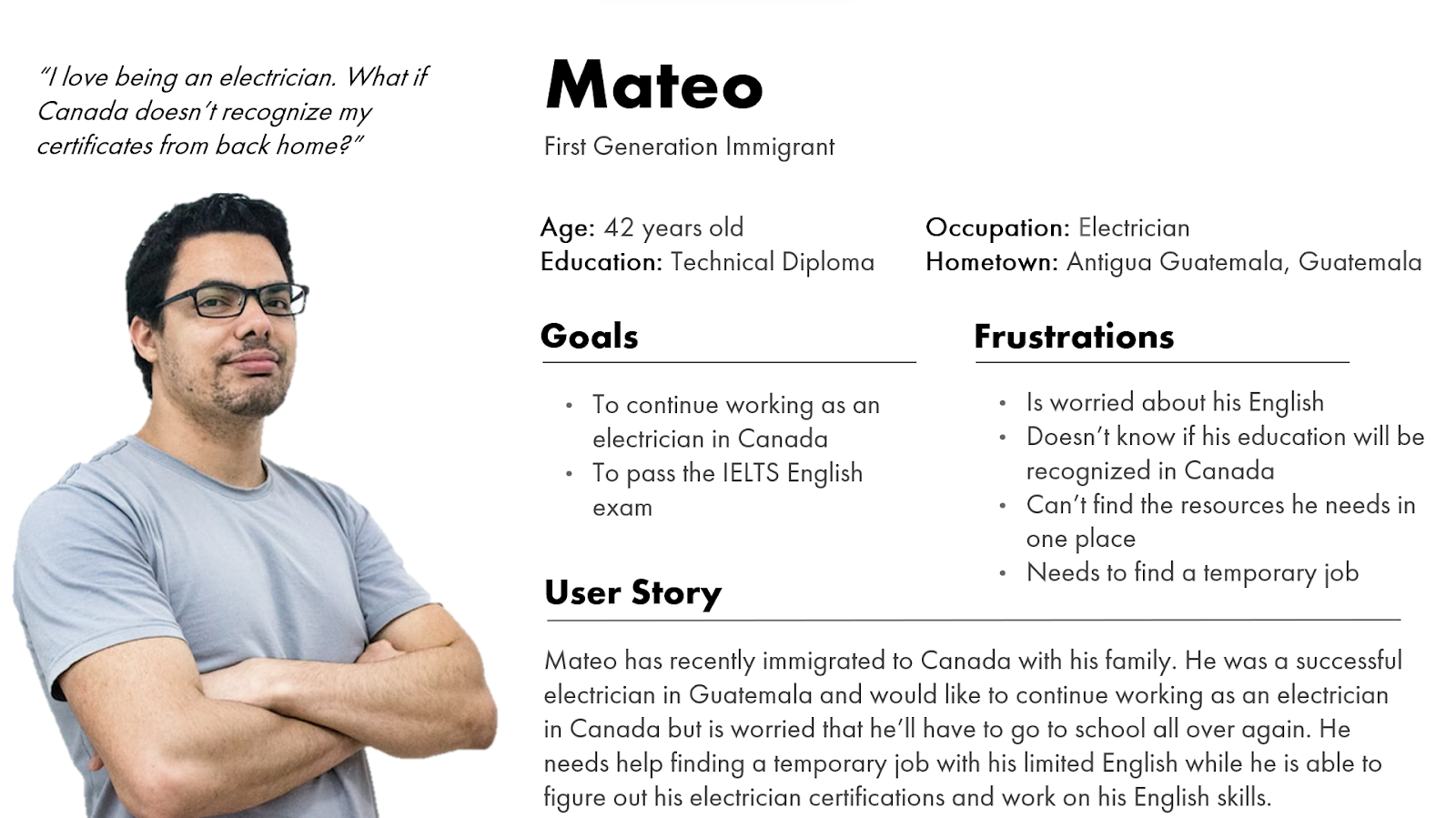
The Internationally Educated Persona
3. Ideate
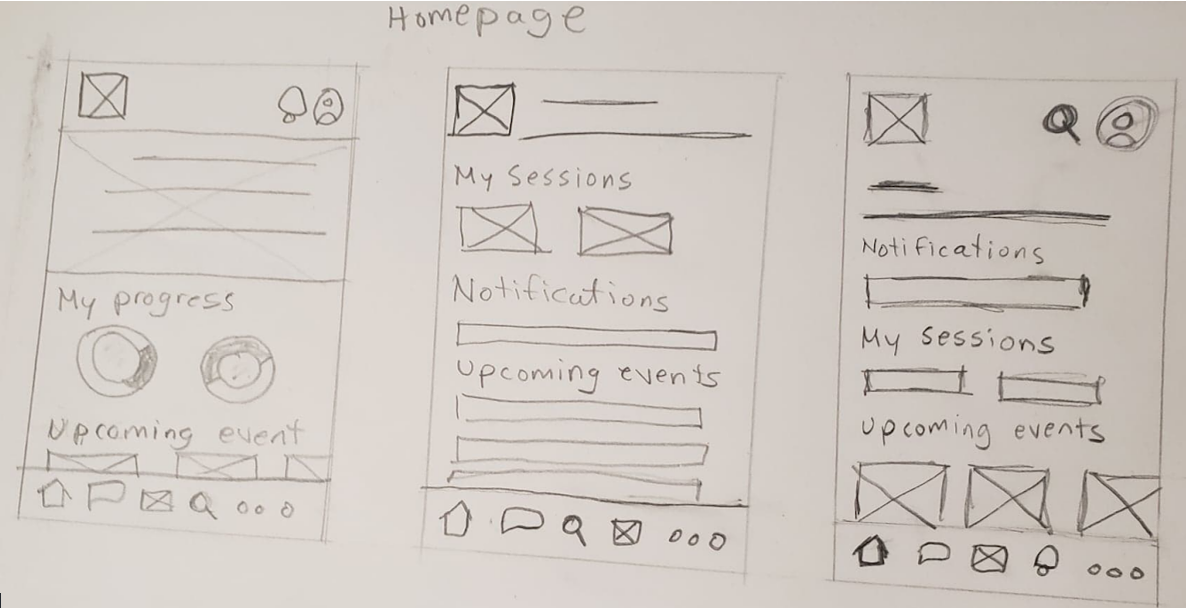
Low-Fidelity Paper Wireframes
I used the Crazy 8 method to sketch eight distinct ideas in eight minutes, with the goal to generate a wide variety of design options.
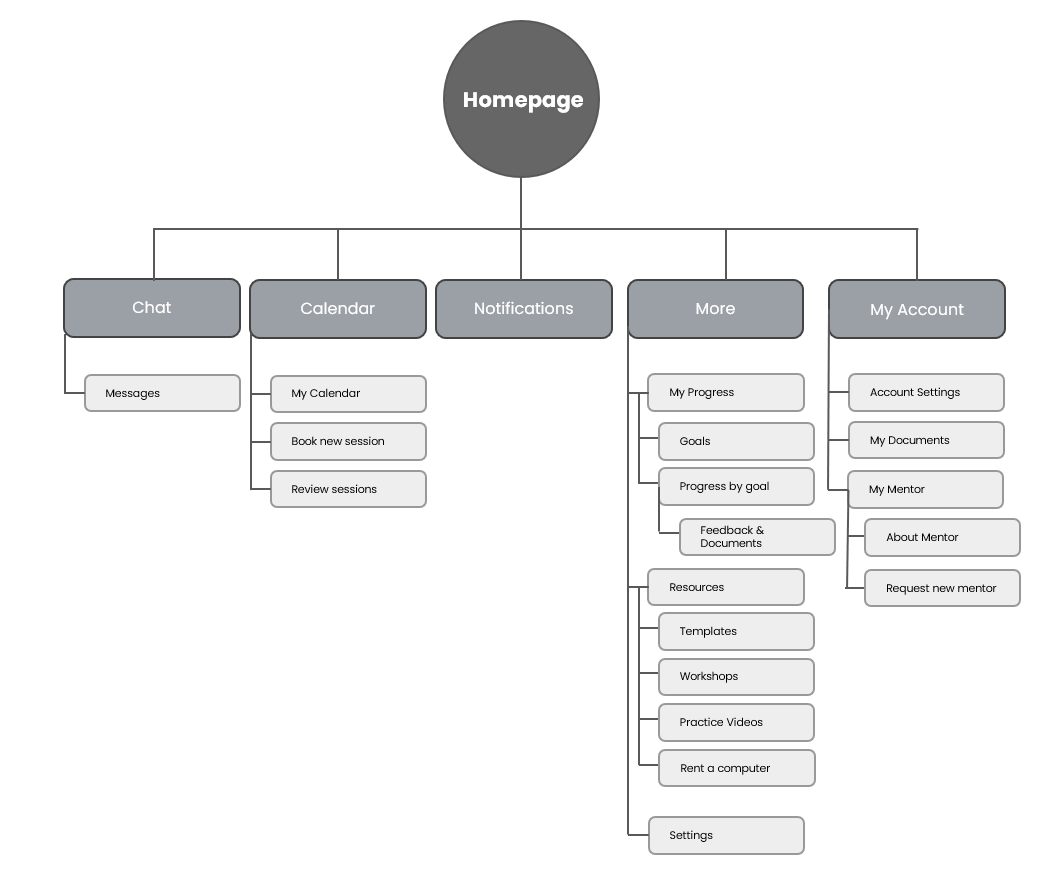
Site Map (App)
4. Prototype
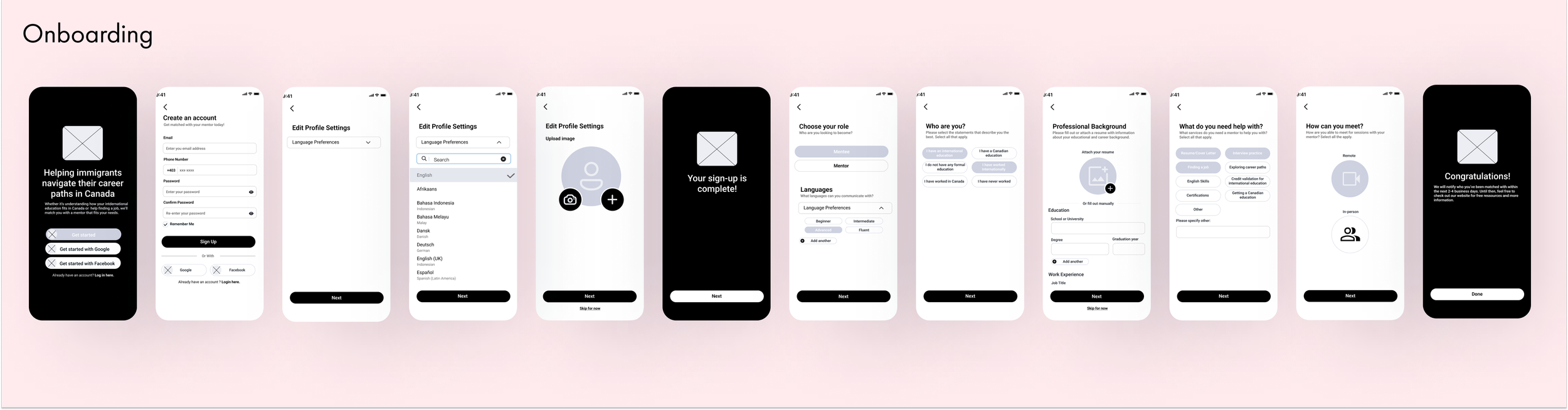
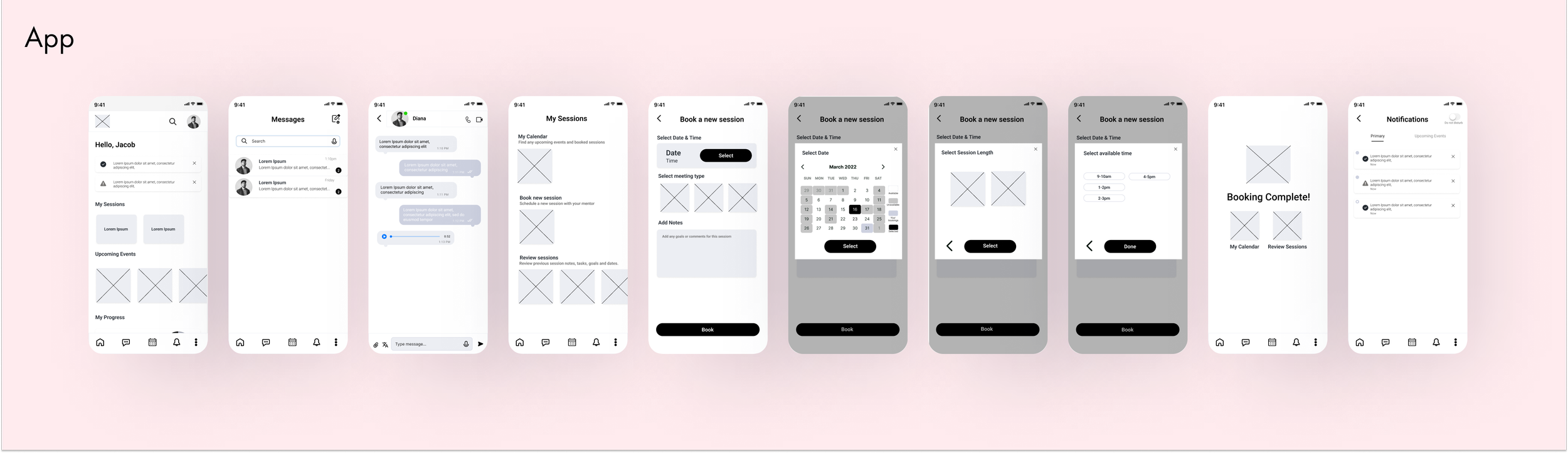
Low-Fidelity Digital Wireframes
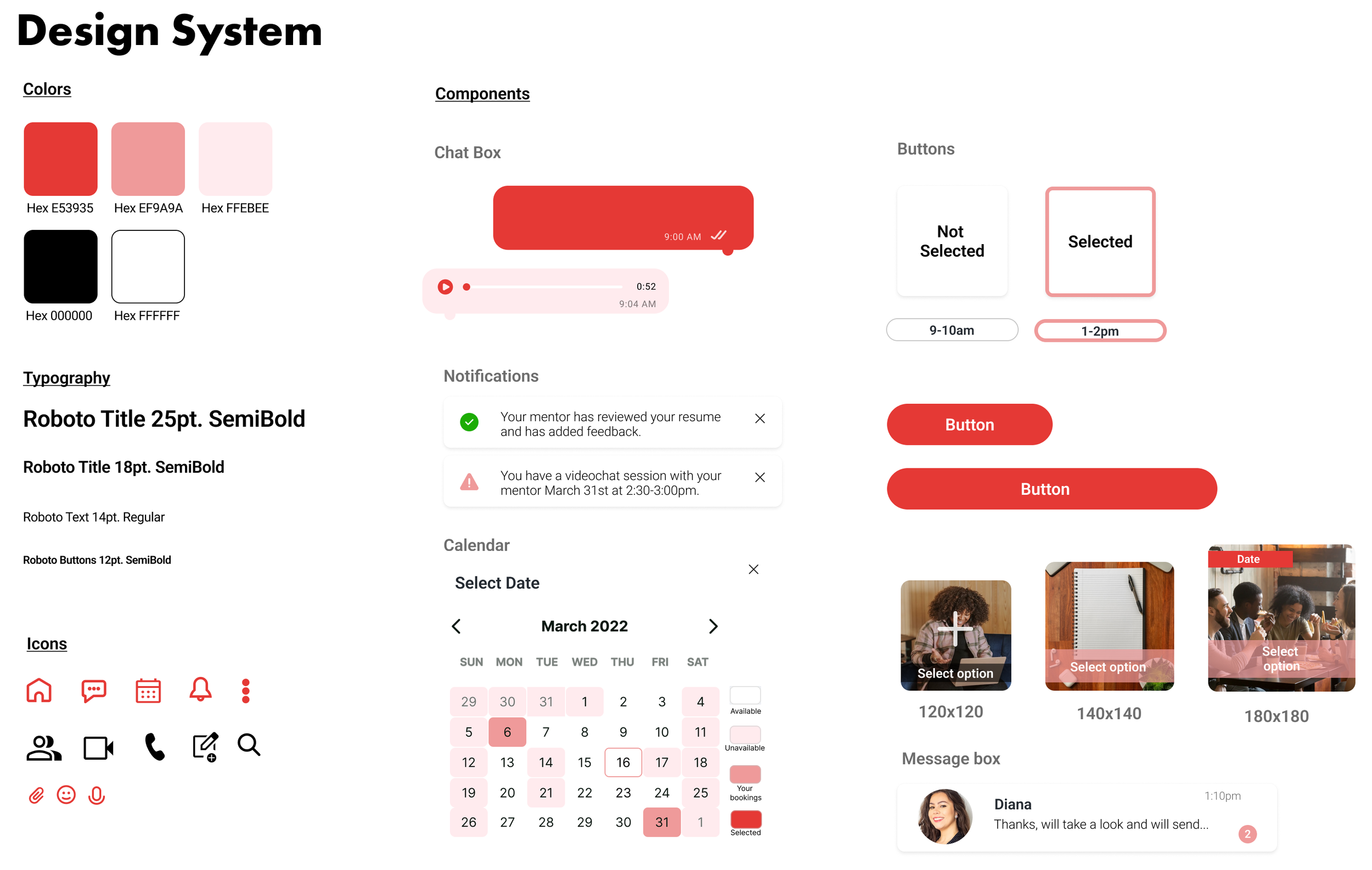
Design System
5. Test
Improvements
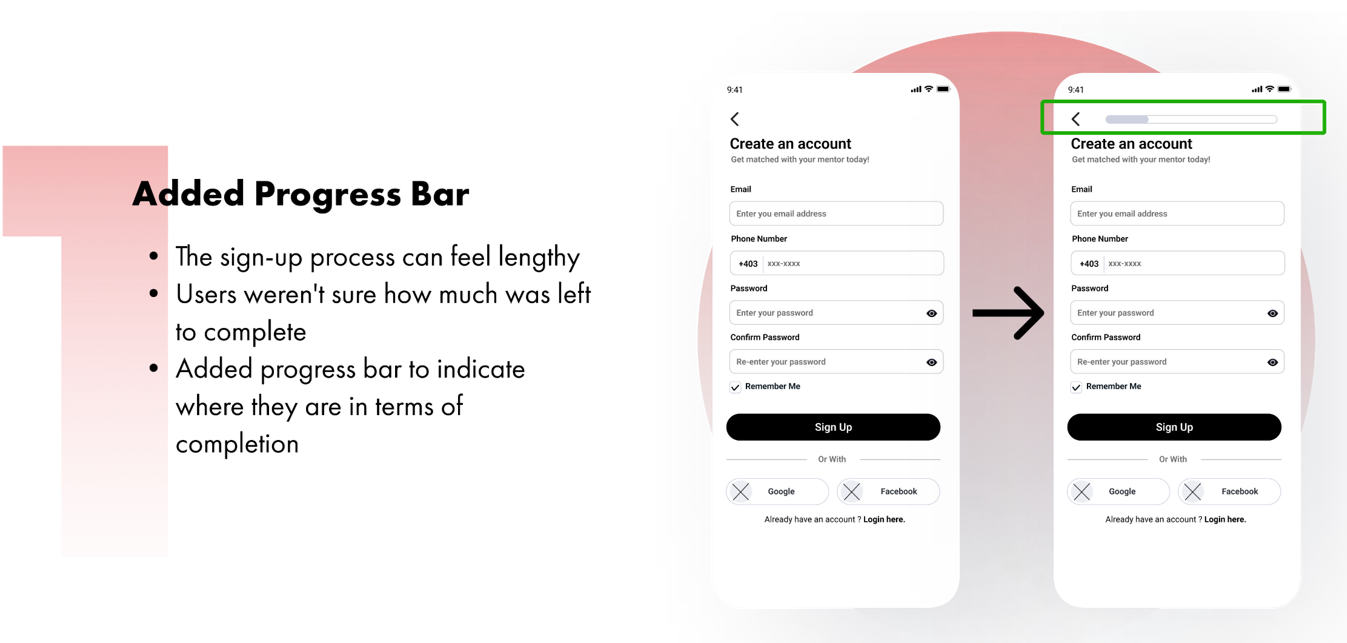
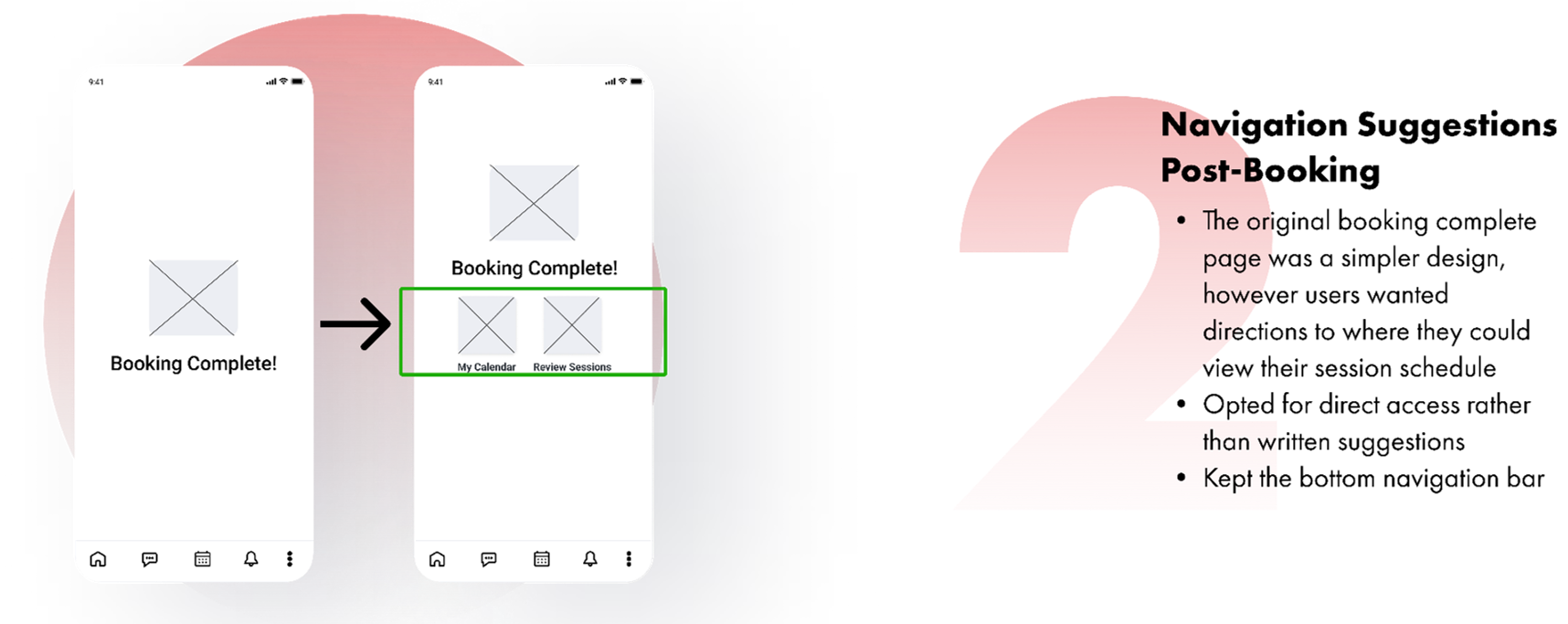
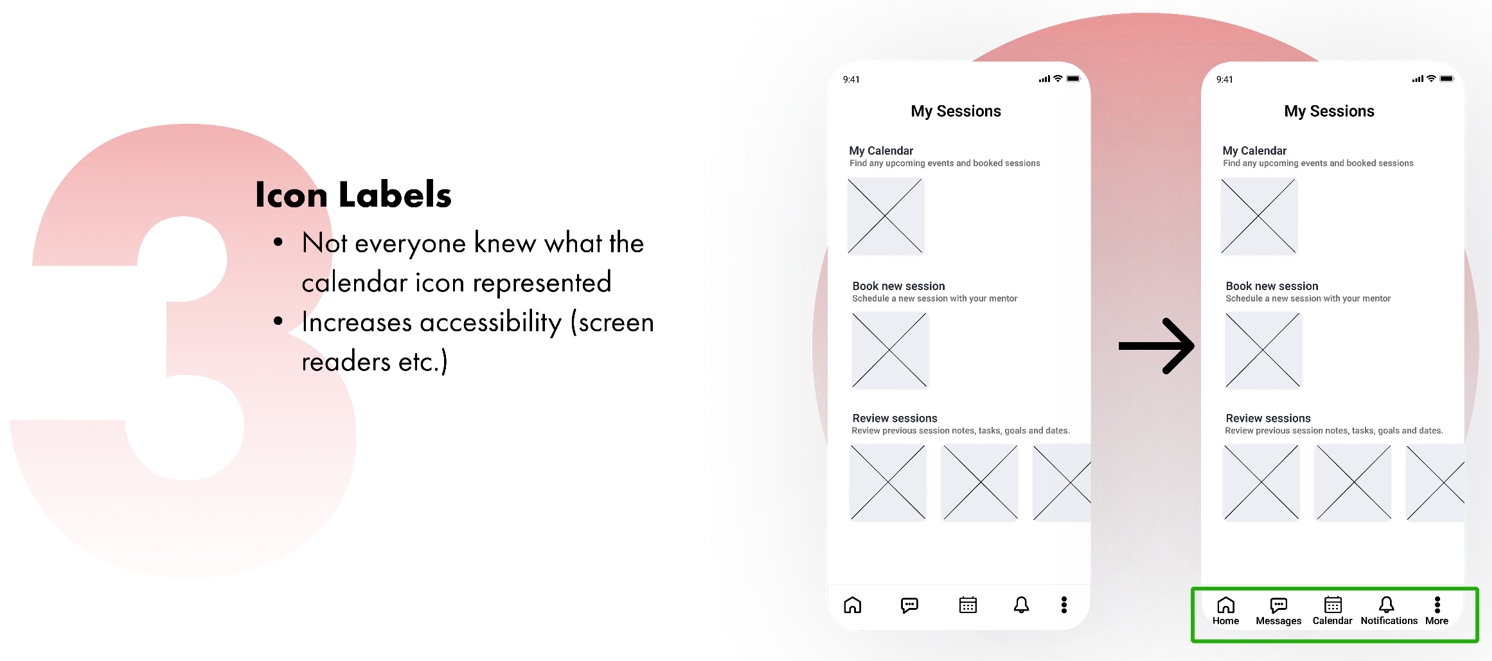
Improvements after the usability study
I conducted 1 round of usability studies to guide the design of my wireframes. The feedback from the 4 participants revealed 3 needed improvements:
6. Final Outcome
App (Interactive)
Onboarding (Interactive)
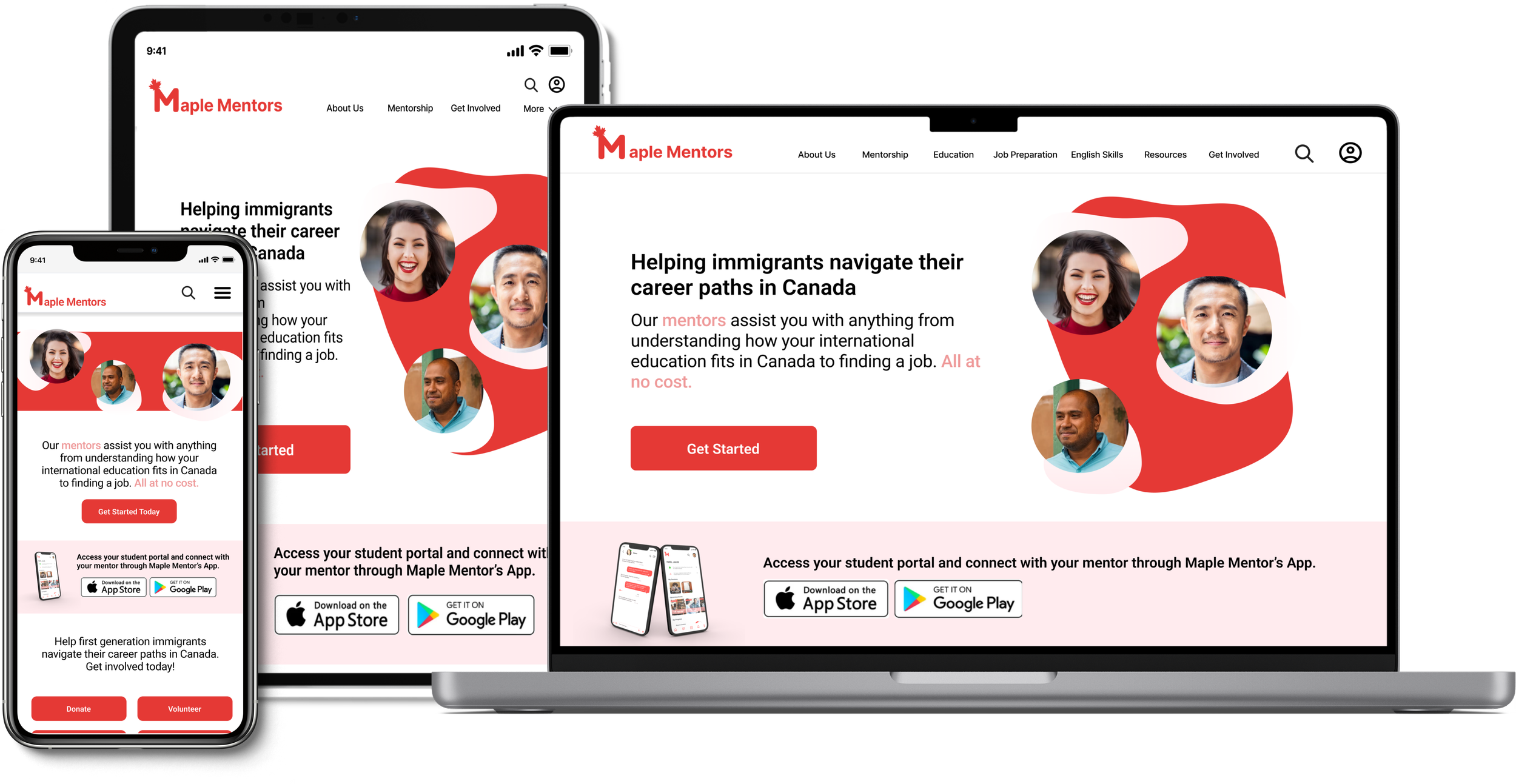
Website
7. Reflections
What I would do differently + Lessons learned
1. Start with accessibility
Throughout the earlier stages of my design I focused on some accessibility features such as colour contrast and text hierarchy. However, In the later stages I found myself having to resize fonts and add text to icons. Considering accessibility features at the beginning of the process will create a design that is easier to use for everyone.
2. More user participants
Immigrants are a huge subset of people with diverse perspectives and experiences. Interviewing and testing a larger sample helps find insights to create designs that are representative of all users.